Getting bogged is not a matter of if, it is a matter of when. The difference between a one-hour delay and a serious incident is the gear you packed and whether you knew how to use it. We do not stock recovery gear that we have not used ourselves on coastal sand, Cape York mud, alpine snow and Simpson Desert dunes. The equipment in this collection is rated, traceable and matched to real recovery work.
A complete recovery setup is not one product. It is a layered kit: traction (recovery boards), kinetic (snatch and kinetic straps), static (winch, soft shackles, tree protector, recovery ring) and the support gear that keeps everything safe (dampener, gloves, glove bag). Build the kit around the vehicle and the trip, not around the cheapest option in each category.
KEY CATEGORIES AND WHAT THEY'RE BUILT FOR
RECOVERY KITS
Pre-bundled bags covering most touring scenarios: soft shackles, snatch strap, recovery ring, dampener, gloves and bag. Add boards and a winch as the build escalates.
WINCHES
Electric winches with synthetic rope sized to vehicle GVM. The right tool for solo remote touring, technical hill recoveries and any scenario without a second vehicle.
RECOVERY BOARDS
Traction boards for sand, mud and snow self-recovery. Maxtrax MK2 is the original and the one we keep buying for our own vehicles.
STRAPS & HARDWARE
Kinetic straps for sand and mud recoveries, snatch straps for traction-loss situations, plus rated soft shackles and recovery rings to anchor it all safely.
KINETIC AND SNATCH STRAPS
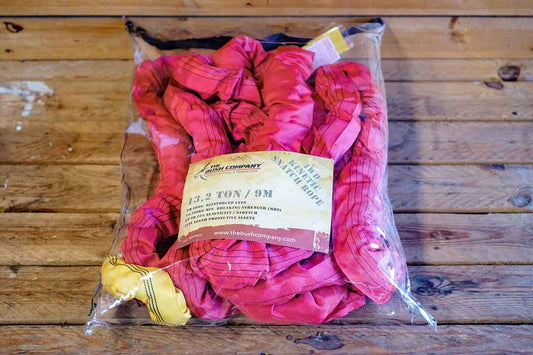
For sand, mud and bog recovery where the stuck vehicle has full traction at the rear wheels, a kinetic energy strap is the fastest and safest option. The strap stretches under load and converts the recovery vehicle's momentum into a smooth pull. We stock SaberPro and Bushranger kinetic straps in vehicle-weight-matched ratings from 8,000kg up to 24,000kg.
Strap rating should be 2 to 3 times the GVM of the lighter of the two vehicles in the recovery. For most touring 4WDs (3,000 to 3,800kg loaded) that means an 8,000 to 12,000kg strap; heavier rigs (200/300 Series, F-trucks) need 16,000 to 24,000kg. Always pair with rated soft shackles and a dampener, and never use a metal D-shackle on a kinetic recovery, that is how people get killed.
SOFT SHACKLES, RECOVERY RINGS AND HARDWARE
Saber Offroad makes the soft shackles, Saber Pro recovery rings, recovery hitches and HDX hardware we use as the default kit. Soft shackles are lighter, safer (no flying steel if a strap fails) and easier to thread through tight recovery points. Saber rings turn a single anchor into a 2:1 mechanical advantage, useful in winching scenarios with limited line length.
Steel D-shackles still have a place in winching where abrasion resistance matters, but for kinetic and snatch recoveries soft shackles are the modern standard.
RECOVERY BOARDS
Maxtrax and similar recovery boards give traction in sand, mud and snow without needing a recovery vehicle. Most stuck-on-sand recoveries we see could have been solved with a set of boards and 90 seconds of self-recovery.
The original Maxtrax MK2 cleat pattern handles sand, mud, snow and rocks; we stock Maxtrax plus Trac Grabber and Bog Out for vehicles where boards are not enough. Cheaper boards exist; we have seen most of them split under load, which is why Maxtrax is the one we keep buying for ourselves.
WINCHES AND WINCH RECOVERY
For solo remote touring, technical hill recoveries and any scenario where there is no second vehicle, an electric winch is the right tool. Match winch capacity to vehicle weight (rule of thumb 1.5x GVM minimum): for a 3,500kg loaded Ranger that is a 9,500lb winch, for a 3,800kg LandCruiser, 12,000lb. Heavier rigs go up from there.
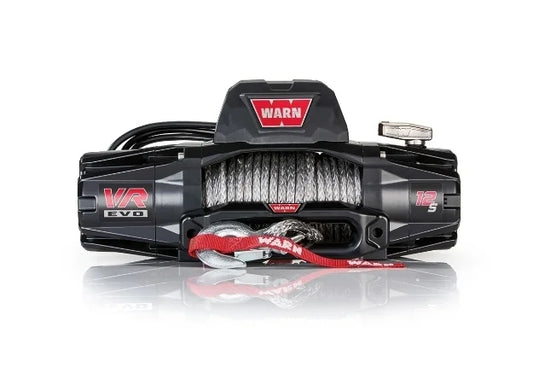
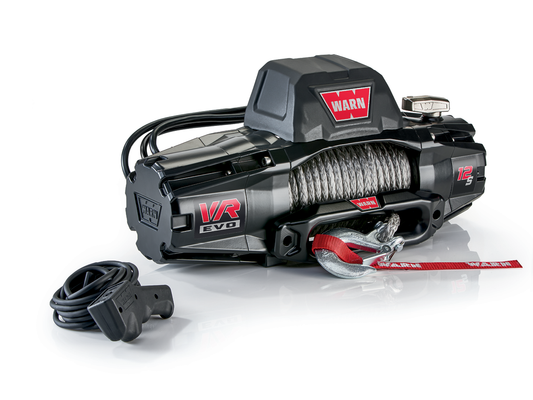
Synthetic rope is safer and lighter than steel cable. We fit and recommend WARN, Carbon Winch and Bushranger winches with synthetic rope, integrated solenoid and wireless remote. The winch lives on a bull bar with a rated cradle.
RECOVERY KITS AND BUNDLES
If this is your first proper kit, start with a complete recovery kit. Bushranger and Saber kit out the most common scenarios in one bundle: soft shackles, snatch strap, recovery ring, dampener, gloves and bag. Add a winch and recovery boards as the build escalates and the touring gets more remote.
For heavier rigs, multi-vehicle convoys or commercial fleets, we spec custom kits. Walk in with the vehicle and trip plan and we will build the right combination.
RATED RECOVERY POINTS
A rated recovery point is non-negotiable. Standard tie-down hooks are not recovery points: they are not engineered to take the force of a kinetic recovery and they will tear out of the chassis. Recovery points are part of the build, not an accessory you add later when you need them.
We supply and install rated recovery points (Saber, Roadsafe, Carbon) on Ranger, Hilux, Patrol, LandCruiser and most popular utes, typically as part of front-end builds.
BRANDS WE STOCK AND WHY
Recovery gear is the kit you trust your life to, so we name what we fit and use ourselves.
Saber Offroad is the Australian brand we trust most for shackles, rings, recovery hitches and HDX hardware. Independently rated, transparent specs, fair pricing for the spec. We use Saber kit on our own vehicles. Maxtrax is the original recovery board, still the most reliable; the MK2 cleat pattern handles sand, mud, snow and rocks.
Bushranger 4x4 Gear covers solid, well-priced kits, snatch and kinetic straps, recovery accessories and entry-level winches; the default starting point for most recovery setups. Bog Out Vehicle Recovery is a solo-recovery option that uses your wheels as the winch, slow but works on roads where there is no anchor and no recovery vehicle. WARN is the premium-tier winch brand, with a long history of reliability, the winch we install on serious expedition rigs.
We also stock The Bush Company recovery accessories, RAXAR, Roadsafe, Rough Country and ARB recovery hardware. Full hardware list in the collection above.
WE'LL TELL YOU IF YOU'RE PICKING THE WRONG RECOVERY KIT
Walk-ins for advice on kit selection are welcome at either workshop. Tell us your vehicle, where you tour and what you have done with the kit before, and we will spec something that actually matches. Recovery is not a one-size category, and a kit that is right for a Hilux on coastal sand is not right for a 79 Series in the Simpson.
WHAT A QUALITY WINCH AND RECOVERY POINT INSTALLATION INVOLVES
Most recovery gear is bolt-on, but the points it bolts to are not. Recovery point installation requires welding or bolting through the chassis with the right hardware, plus a load test. Winch installation requires the right harness routing, solenoid placement and bonded earth so the winch fires when you need it.
We install recovery points and winches at Ferntree Gully and Pakenham as part of full front-end builds. Submit a service enquiry with your vehicle and what you are building.






 Read the Privacy Policy



 1300 633 762