A kinetic recovery rope elongates under load, stores energy and releases it progressively to help move a stuck vehicle. That can moderate the load transfer compared with using low-stretch towing equipment, but no recovery is free of force or risk. Rope selection must account for both vehicles, approved recovery points, connection hardware, terrain and the manufacturer's instructions.
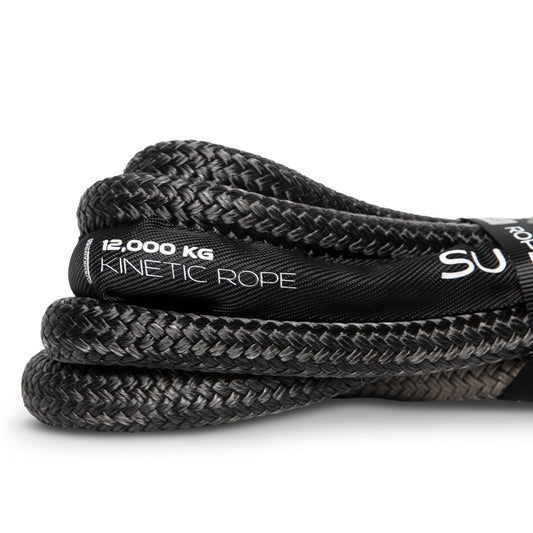
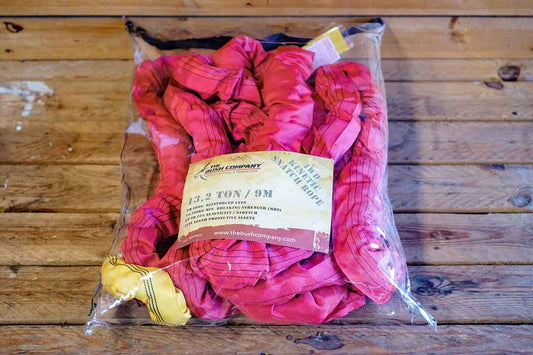
The Bushranger 12,000kg Kinetic Rope and The Bush Company Kinetic Snatch Recovery Rope 9m 13.2t are available in this collection. For either rope, confirm the basis of its stated figure in the manufacturer's documentation before selection or use.
Need it fitted? Our Ferntree Gully and Pakenham workshops supply and install everything in this range. Not sure which option suits your vehicle? Call our friendly staff on
1300 633 762 before you order.
KEY CATEGORIES AND WHAT THEY'RE BUILT FOR
BUSHRANGER 12,000KG KINETIC ROPE
A standalone Bushranger rope for buyers assembling or updating a recovery system. Check that the rope, shackles, recovery points and any bridle are compatible. A rope rating alone does not confirm that the complete system suits the vehicle or intended recovery.
THE BUSH COMPANY 9M 13.2T ROPE
The Bush Company kinetic snatch recovery rope is listed at 9m and 13.2t. Use the manufacturer's instructions to confirm elongation, connection requirements, inspection criteria and rating terminology before use.
KITS, BAGS AND SUPPORTING HARDWARE
If you need a kinetic rope kit rather than a standalone rope, confirm its contents instead of assuming shackles, a bridle or a recovery rope bag are included. Every component must suit the rope and the vehicle manufacturer's approved recovery arrangement.
WHY A KINETIC RECOVERY ROPE DIFFERS FROM A TOW STRAP
A towing strap is intended for controlled towing, not a momentum-based bog recovery. A kinetic recovery rope is designed to elongate and transfer stored energy during recovery. The term snatch rope is also used for kinetic recovery ropes, while a snatch strap generally refers to flat webbing. Do not select between them by name alone. Compare the manufacturer's construction, rating method, elongation guidance and instructions.
CHOOSE BY USE CASE
For a touring ute such as a Hilux, Ranger, Triton or D-MAX, start with the vehicle's loaded mass and approved recovery points. Do not assume that every vehicle in the same class needs the same rope.
For a heavier LandCruiser, Patrol or loaded touring vehicle, consider both the stuck vehicle and the recovery vehicle. Added load, surface conditions and recovery direction can change the forces involved.
For a mixed convoy, choose equipment only after considering the lightest and heaviest vehicles. An oversized rope may not elongate as intended with a lighter vehicle, while an unsuitable lower-rated rope may be overloaded. Manufacturer guidance should decide the final selection.
PAIRING WITH SHACKLES, BRIDLES AND RECOVERY POINTS
A rope is one part of the recovery system. Connections must be compatible with the rope, and recovery points must be approved for the vehicle and intended direction of pull. A bridle may distribute load across two suitable points when the vehicle and equipment manufacturers allow that arrangement.
For compatible shackles and bridles, see recovery accessories. For vehicle-mounted equipment, see recovery points and hitches.
Do not connect a rope to a transport tie-down point or unidentified mounting point. Metal hardware should not be treated as automatically suitable or unsuitable. Follow the instructions for every component and consider the consequences if any part of the system fails.
RECOVERY TECHNIQUE NOTES
Plan the recovery before either vehicle moves. Confirm communication between drivers, clear bystanders from the area and inspect the rope, connections and recovery points. Apply load progressively within the manufacturer's technique guidance. Stop and reassess if the rope, attachment angle or vehicle response differs from the plan.
Never stand over or beside a loaded rope. Keep people outside the potential path of the rope and hardware. Complex recoveries, multiple recovery vehicles and poor attachment angles require more planning than a simple straight-line pull.
WHAT THIS COLLECTION INCLUDES
The collection is focused on kinetic recovery ropes from Bushranger and The Bush Company. It does not currently list a complete kit.
WHAT TO CHECK BEFORE CHOOSING
Check the manufacturer's stated rating method, recommended vehicle mass, elongation information and connection requirements. Inspect the rope before and after use for cuts, abrasion, damaged eyes, contamination or heat damage. If its condition or history is uncertain, remove it from service until the manufacturer or a suitably experienced specialist advises otherwise.
Store the rope clean and dry, away from unnecessary UV exposure and chemicals. Keep its instructions and identification with it. A suitable bag helps separate recovery equipment from sharp or contaminated gear, but storage does not replace inspection.
Ultimate Offroad is family-owned and independent. If you are not sure which kinetic recovery rope, approved recovery points or compatible hardware suit your vehicle and intended use, reach out to our friendly staff at Ferntree Gully or Pakenham.
Submit a service enquiry with your vehicle details, or email sales@ultimateoffroad.com.au, and our friendly staff will confirm fitment, quote the work and arrange a booking at Ferntree Gully or Pakenham.






 Read the Privacy Policy


 1300 633 762