A solar regulator sits between the solar panel and battery. It controls the panel input so the battery receives an appropriate charging profile. An unregulated connection can expose the battery to unsuitable voltage and cause damage. The right solar charge controller also needs to suit the array, battery voltage, battery chemistry and any planned system expansion.
This collection includes four Victron Smart Solar MPPT models supplied through Battery Works: 75/10, 75/15, 100/20 and 100/30. Built-in Bluetooth monitoring through the Victron Connect app provides access to charging information and configuration settings. Choose by use case, then confirm the electrical limits against the panel and battery specifications before ordering.
Need it fitted? Our Ferntree Gully and Pakenham workshops supply and install everything in this range. Not sure which option suits your vehicle? Call our friendly staff on
1300 633 762 before you order.
VICTRON SMART SOLAR MPPT MODELS
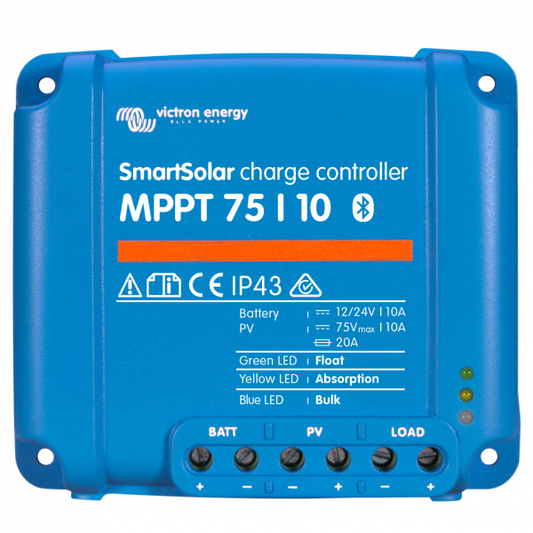
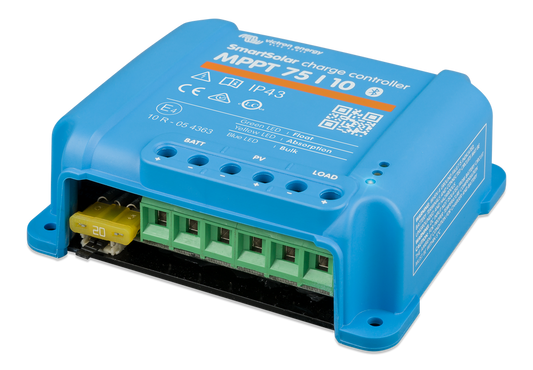
SMART SOLAR MPPT 75/10
A compact option for smaller touring systems and a single folding solar blanket. The current sizing guidance allows up to 145W of panel input at a 12V battery. Confirm the complete system specification before selection.
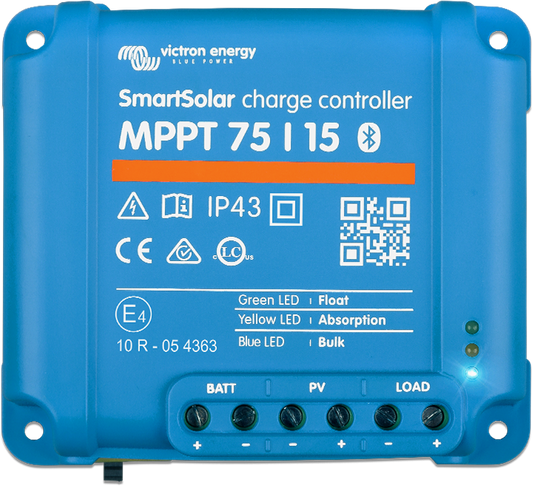
SMART SOLAR MPPT 75/15
Suited to common fridge-and-lights touring builds. Current guidance allows up to 220W at a 12V battery, providing more scope than the 75/10 where expansion is planned.
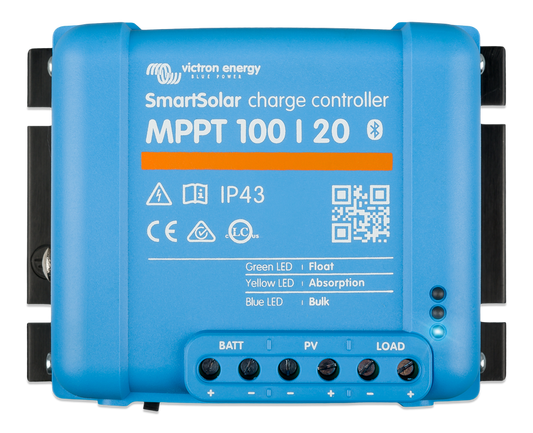
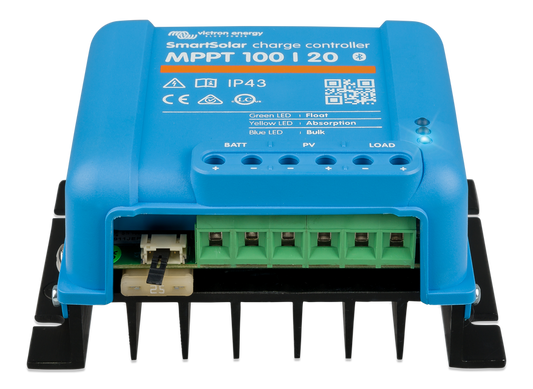
SMART SOLAR MPPT 100/20
Intended for larger arrays or battery systems. Current guidance allows up to 290W at a 12V battery. It can suit systems combining fixed roof panels with a folding blanket.
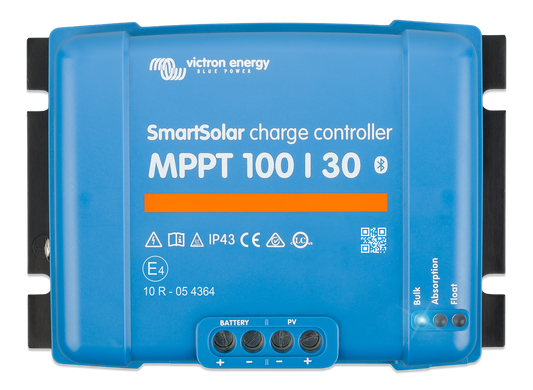
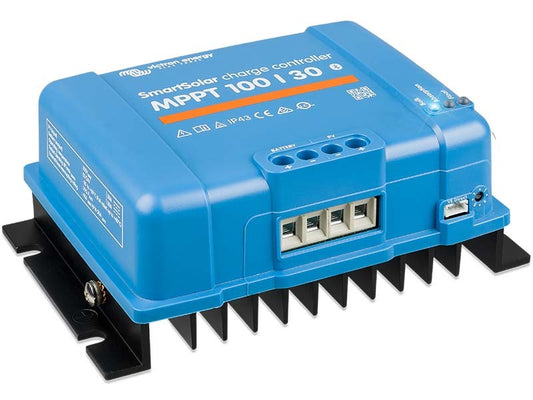
SMART SOLAR MPPT 100/30
The collection also includes the 100/30. Check its current manufacturer limits against the array voltage, battery voltage and planned load before choosing it for a build.
MPPT VS PWM EXPLAINED
PWM and MPPT regulators manage panel output differently. PWM pulls panel voltage towards battery voltage. An MPPT charge controller tracks the panel's operating point and converts available panel power into charging current. This can make better use of changing solar conditions, but actual results depend on the panel, battery, light, wiring and configuration.
For a touring build, the decision should be based on the full charging system rather than the regulator alone. Panel layout, partial shade, cable losses, battery state and daily load all affect the result.
SIZING TO THE SOLAR ARRAY
Regulator size must match the solar array and battery voltage. The current comparison points for a 12V battery are:
- 75/10: up to 145W of panel input
- 75/15: up to 220W of panel input
- 100/20: up to 290W of panel input
- 100/30: check the current manufacturer limits for the proposed system
An undersized regulator can cap output at its rated charging current, leaving some panel potential unused. Allow for planned expansion, but do not assume that spare regulator capacity makes every panel combination suitable. Input voltage and other manufacturer limits still apply.
BLUETOOTH MONITORING
Each Victron Smart Solar regulator shown here includes built-in Bluetooth. The Victron Connect app can display charge state, battery voltage, daily yield, historical data and configuration settings on a compatible phone or tablet.
Monitoring helps identify whether the system is charging as expected. During a workshop installation, we pair the regulator with the app and configure it for the connected battery rather than leaving the settings at an assumed default.
BATTERY TYPE CONFIGURATION
Different battery chemistries require different charging profiles. The available settings include lithium iron phosphate, AGM, gel and wet lead-acid configurations. The selected profile must match the battery manufacturer's requirements and the rest of the charging system.
We check the battery type and configure the relevant absorption, float and related settings during installation. Battery chemistry should never be selected from appearance or a general label alone.
WIRING AND FUSING
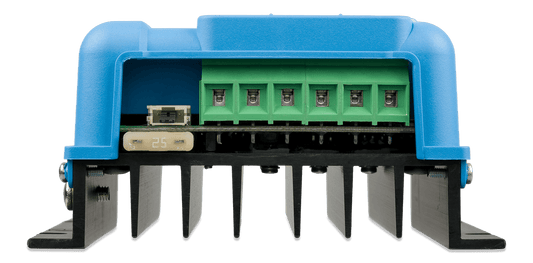
A regulator has separate solar input and battery output circuits. Cable size, fuse selection, connection type and routing need to suit the regulator, current, cable run and installation environment. Protection must be considered on both sides of the regulator.
Solar blanket connections also need to be assessed before wiring. Some blankets already include regulation, while others are intended to connect to a separate regulator. Confirming the existing arrangement avoids duplicated regulation, unsuitable connections and incorrect polarity.
BRAND WE STOCK AND WHY
Battery Works is the listed supplier for the Victron Smart Solar MPPT range in this collection. The four stocked model titles cover several starting points for touring solar systems, from compact blanket setups to systems being assessed for larger arrays.
Selection still depends on the vehicle and electrical design. Model codes alone are not enough to confirm panel, battery or wiring compatibility.
WHAT A QUALITY SOLAR REGULATOR INSTALLATION INVOLVES
A sound installation covers more than connecting four wires. The regulator needs airflow around its heatsink. Cable and fuse selection must suit the load and cable run. The charging profile must match the battery, and the completed system should be tested under load before handover.
If you are fitting locally or planning a DIY installation, confirm the panel output, battery requirements and protection before starting. Our Ferntree Gully and Pakenham workshops can mount, wire and configure a solar regulator as part of a complete touring electrical setup. Send us a service enquiry with your vehicle, battery and solar details so the team can assess the job and arrange a booking.
Email sales@ultimateoffroad.com.au with your vehicle details and our friendly staff will confirm fitment, quote the work and arrange a booking at Ferntree Gully or Pakenham.







 Read the Privacy Policy
 1300 633 762