A lithium 4WD battery needs to support the real electrical load of the vehicle. That may include a fridge, lighting, pumps, charging devices and an inverter. It must also suit the available mounting space, charging system, cable capacity and protection. The right choice comes from assessing the complete system, not capacity alone.
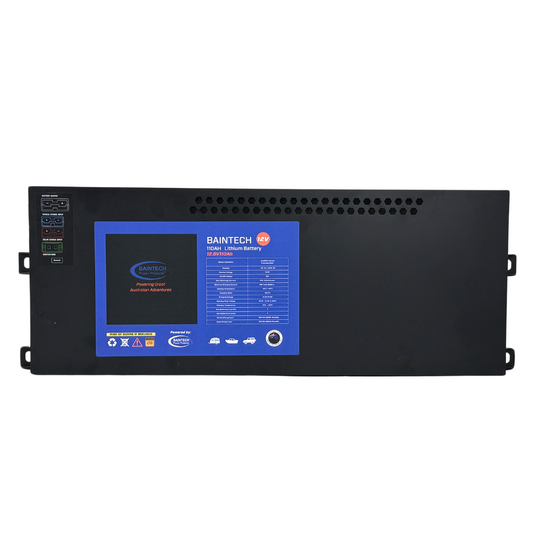
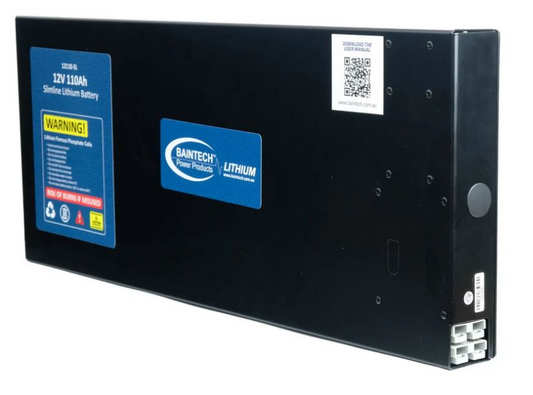
This collection focuses on two Baintech 110Ah lithium options. One is a standalone battery. The other is a slimline model with a built-in 40Amp DC-MPPT charger. Each suits a different electrical layout, so existing hardware and the planned installation should guide the decision.
Need it fitted? Our Ferntree Gully and Pakenham workshops supply and install everything in this range. Not sure which option suits your vehicle? Call our friendly staff on
1300 633 762 before you order.
KEY CATEGORIES AND WHAT THEY ARE BUILT FOR
STANDALONE 110AH LITHIUM
A standalone 110Ah lithium battery suits a build that already has compatible charging equipment. Check the charger's lithium settings, output, wiring and protection against the battery manufacturer's requirements before connecting it.
SLIMLINE 110AH LITHIUM WITH BUILT-IN CHARGING
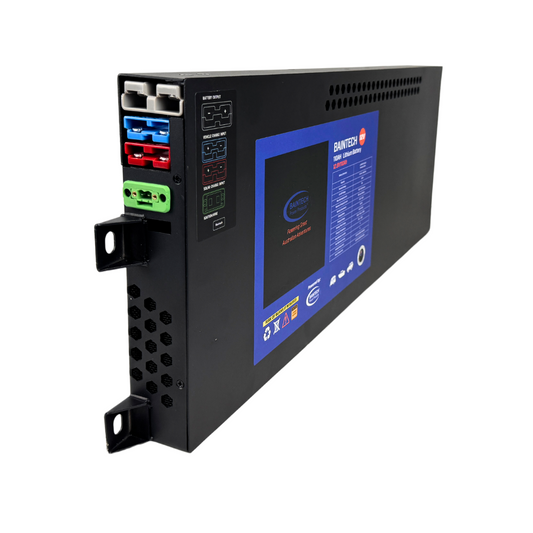
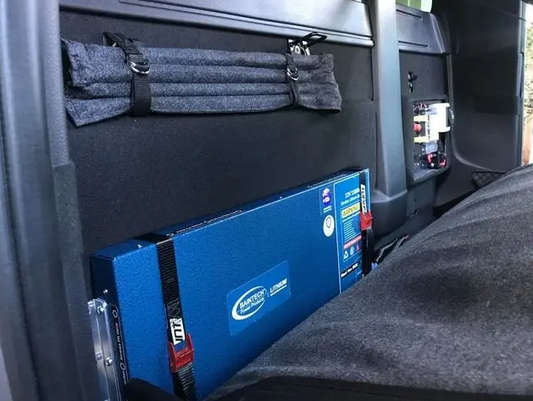
The Baintech slimline lithium battery combines 110Ah capacity with a built-in 40Amp DC-MPPT charger. This can reduce the separate charging hardware required in a canopy or rear storage installation. Vehicle input, solar input and load wiring still need to be planned as a complete system.
UNDER BONNET BATTERY SUITABILITY
An under bonnet battery installation should never be assumed suitable. Battery construction, temperature exposure, enclosure requirements and manufacturer-approved mounting locations all matter. Confirm the product documentation and vehicle layout before choosing an engine-bay position.
CHOOSE BY USE CASE
TOURING LOADS
Start with a power audit. List every fridge, light, pump, device charger and accessory. Record how much current each load draws and how long it will operate between charging opportunities. A 110Ah lithium system may suit a straightforward touring setup, but runtime changes with the load, solar conditions, driving time and battery operating limits.
INVERTER LOADS
An inverter can place a substantial load on the battery and cabling. Match the battery, inverter, cable size, fuse protection and isolation equipment as one system. Confirm that the battery manufacturer's permitted discharge current suits the intended appliance load.
EXISTING CHARGING SYSTEMS
A standalone battery can be appropriate when compatible charging equipment is already installed. Do not treat it as an automatic replacement for an AGM battery. Charging profiles, protection settings, mounting and cable requirements may differ. Have the existing system checked before changing battery type.
WHY CONSIDER LITHIUM INSTEAD OF AGM
Lithium can provide more usable auxiliary capacity and lower installed mass than a comparable AGM arrangement. It can also maintain a steadier voltage while supplying demanding accessories. Actual capacity, mass, discharge performance and cycle life vary by product and operating conditions, so compare current manufacturer specifications rather than relying on a general ratio.
For a touring vehicle, the practical benefit is packaging. A 110Ah lithium battery can support useful auxiliary capacity without occupying the space required by a larger multi-battery arrangement. The final result still depends on correct charging and realistic load planning.
PAIRING WITH DC-DC CHARGERS AND SOLAR
Do not assume that direct alternator output is suitable for charging a lithium battery. Vehicle charging behaviour varies, particularly where smart alternators are fitted. Use compatible equipment and follow the battery and charger manufacturers' requirements.
The stocked Baintech slimline model includes a 40Amp DC-MPPT charger. For a standalone battery, compare compatible equipment in the battery chargers collection. Charger selection should account for the battery specification, alternator, cable run, expected driving time and solar input.
Solar can extend the time between vehicle charging opportunities, but the result depends on panel output, placement, weather and daily consumption. Confirm how the solar input will connect and whether additional isolation or protection is required.
PAIRING WITH INVERTERS AND BATTERY MONITORS
Battery voltage alone may not provide a useful view of remaining capacity across the full discharge range. A shunt-based battery monitor measures current entering and leaving the system. This makes it easier to understand consumption, charging performance and remaining capacity.
When an inverter is included, monitoring also helps identify sustained loads that may be greater than expected. The battery, inverter and protective devices must remain within their respective manufacturer limits.
WHAT THIS COLLECTION INCLUDES
Baintech, listed in the catalogue under BAINBRIDGE TECHNOLOGIES, is the stocked brand in this collection. The range includes a 110Ah battery and a 110Ah slimline battery with a built-in 40Amp DC-MPPT charger.
If you are comparing a DCS battery from elsewhere with a Baintech lithium option, use current manufacturer documentation. Compare installation location, charge requirements, discharge limits, dimensions and warranty terms. Do not assume products with similar stated capacity are interchangeable.
WHAT TO CHECK BEFORE CHOOSING
Confirm the available mounting space, expected loads, charging sources, cable route, fuse protection and isolation requirements. Check whether the battery is approved by its manufacturer for the proposed location. Review the operating limits and warranty conditions before installation.
Compliance also depends on the vehicle, installation and the regulations applying in your state or territory. A product should not be treated as automatically ADR compliant, road legal or exempt from engineering requirements. Check current rules or speak with our workshop about the proposed build.
Ultimate Offroad supplies and fits lithium 4WD battery systems at Ferntree Gully and Pakenham. We can assess the vehicle, existing charging equipment, planned loads and mounting space before recommending either Baintech option. The aim is a properly integrated touring electrical system that can be tested before handover.
---
Submit a service enquiry with your vehicle details, or email sales@ultimateoffroad.com.au, and our friendly staff will confirm fitment, quote the work and arrange a booking at Ferntree Gully or Pakenham.






 Read the Privacy Policy
 1300 633 762